Full-stack build 路 C# and .NET

Rental Management API

A rental property management system for properties, tenants, leases and payments. It is a RESTful ASP.NET Core Web API on .NET 10 with Entity Framework Core and PostgreSQL, and a Vue 3 and TypeScript front end that reads from it.

Back end
C#, ASP.NET Core Web API (.NET 10), Entity Framework Core, Npgsql, Swagger
Database
PostgreSQL 17 via Docker Compose, with an EF Core migration
Front end
Vue 3, TypeScript, Vite and Vue Router
Scope
Properties, tenants, leases and payments, with a portfolio dashboard

The system running

API and front end, end to end.

Screenshots from the API and Vue app running locally against PostgreSQL, with illustrative demo data entered through the API.

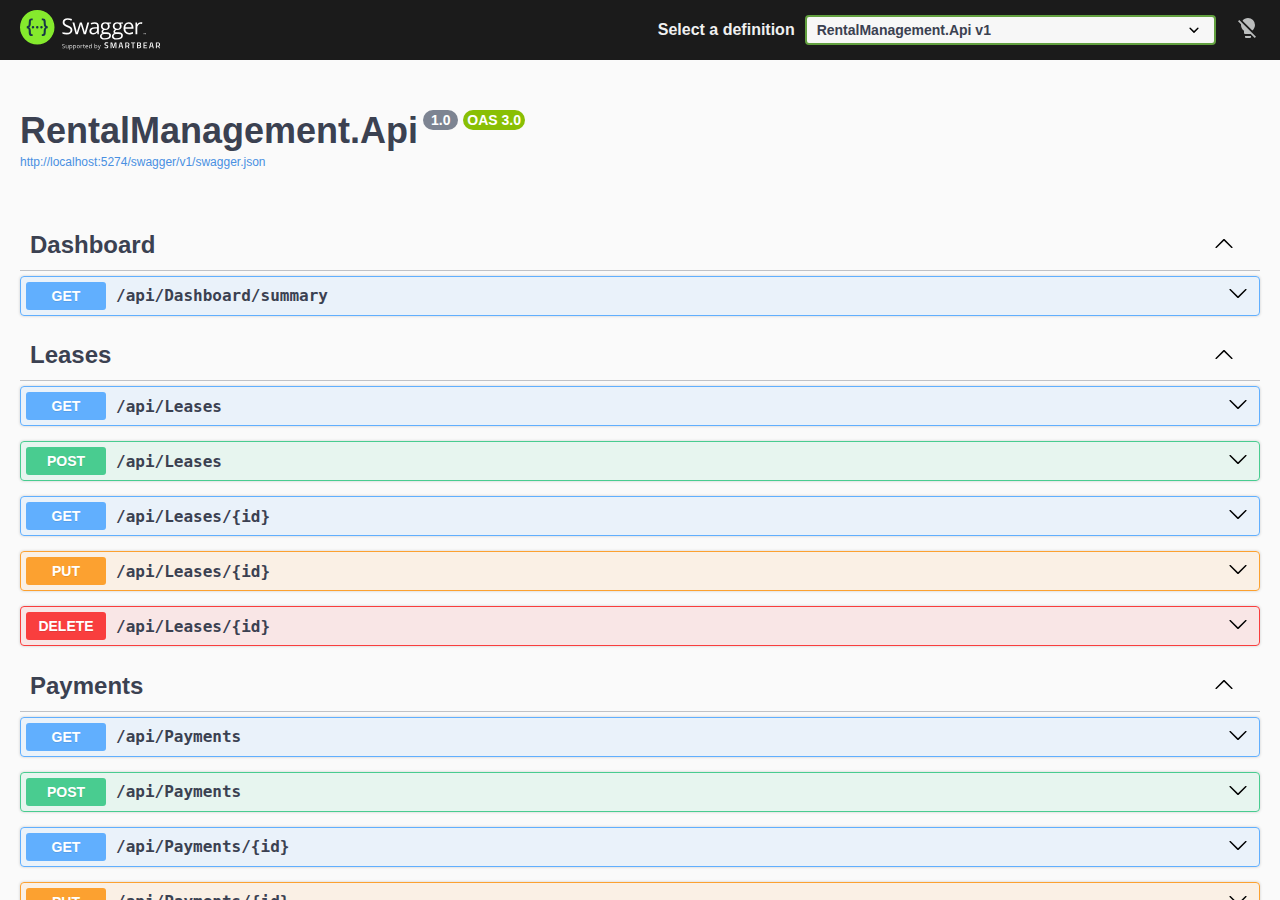
Swagger UI listing the Dashboard, Leases and Payments endpoints
Swagger UIEvery controller documented and testable in the browser: dashboard summary, then full CRUD for properties, tenants, leases and payments.
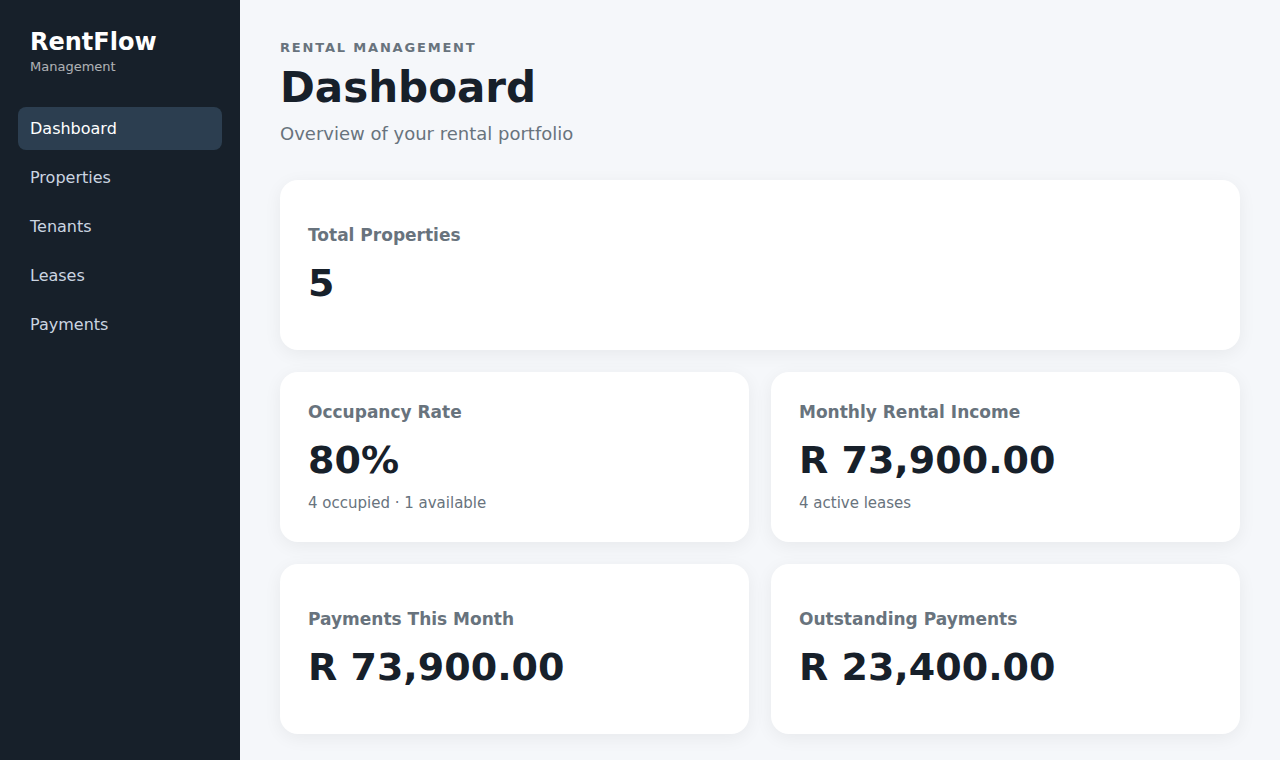
Dashboard with occupancy, rental income, payments this month and outstanding payments
DashboardOccupancy, monthly rental income, payments this month and outstanding payments, all from one summary endpoint.
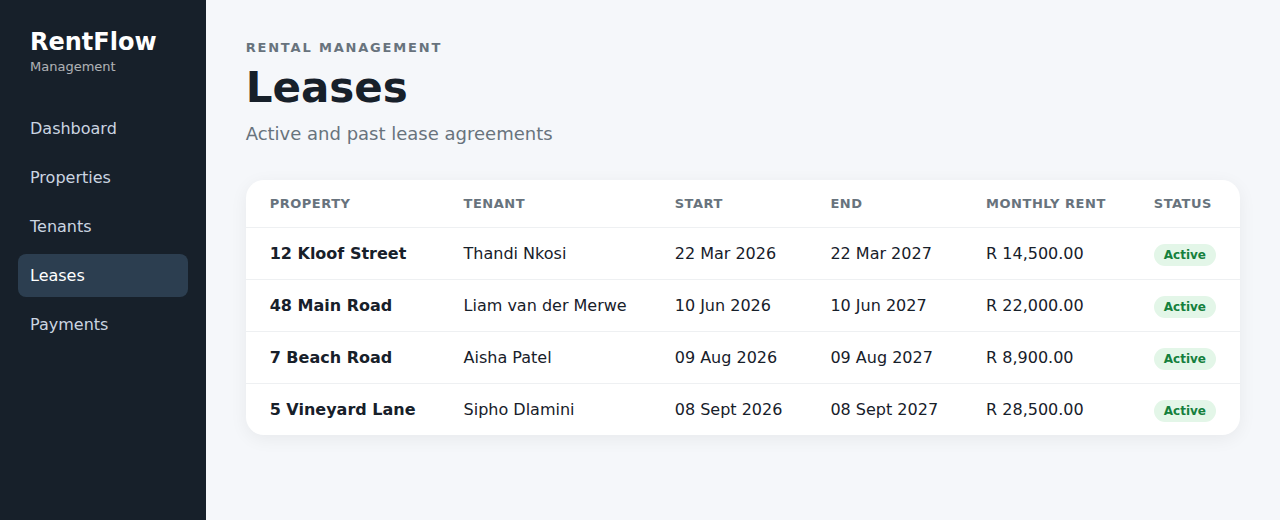
Leases table showing property, tenant, dates, monthly rent and status
LeasesEach lease joins a property and a tenant, with dates, monthly rent and status.
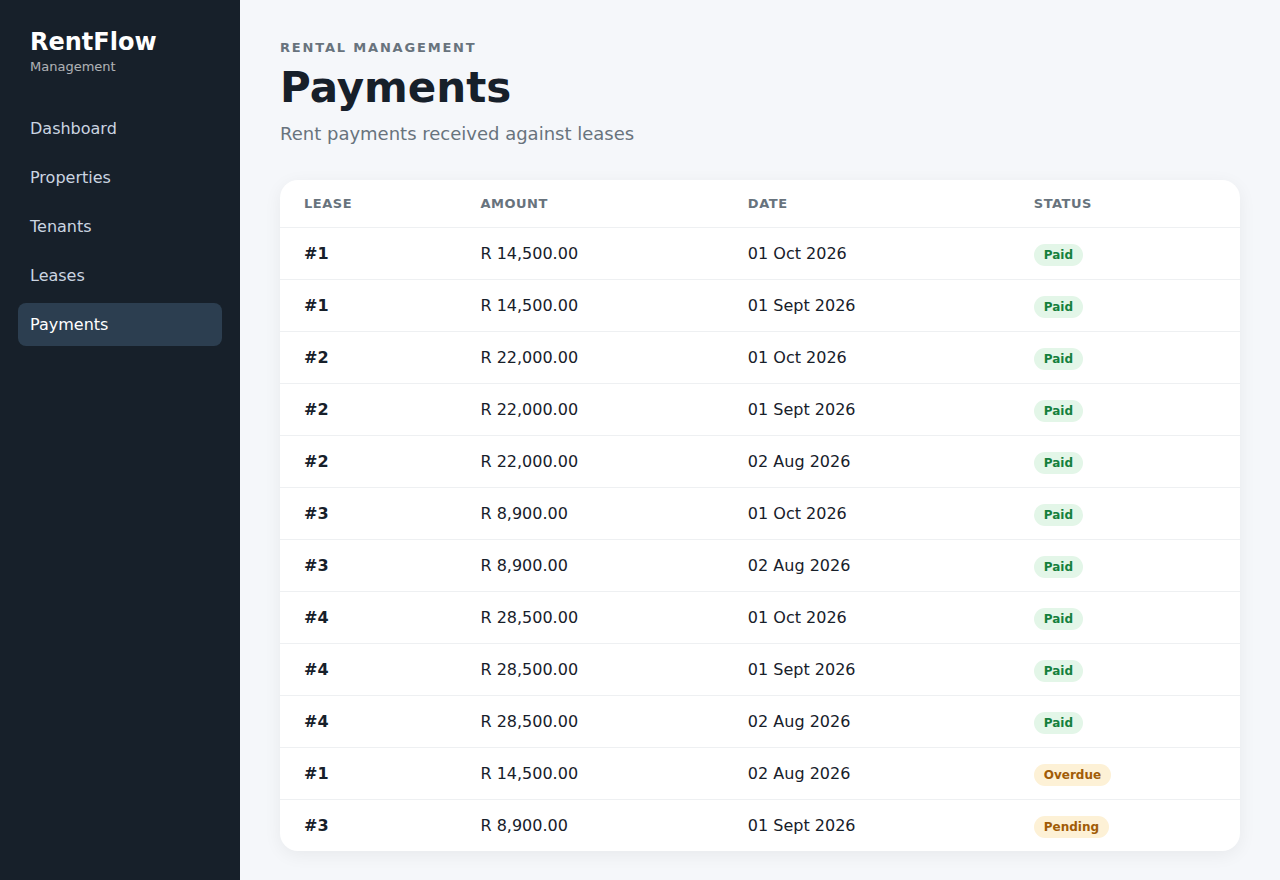
Payments table with paid, overdue and pending statuses
PaymentsRent payments recorded against leases, with paid, pending and overdue statuses.

API design

A small domain with the rules enforced on the server.

01 路 Model

Four related entities

Property, Tenant, Lease and Payment, related through EF Core. Deleting a property or tenant that has leases is restricted, payments cascade from their lease, and money columns are fixed at decimal(12,2).

02 路 Contracts

DTOs for every operation

Separate create, update and response DTOs per entity keep the database model out of the API surface. Read endpoints use AsNoTracking and project straight into response DTOs.

03 路 Rules

Business rules in the controllers

A lease is rejected if the property or tenant does not exist, the property already has an active lease or is unavailable, or the end date is not after the start date. Creating a lease marks the property unavailable and deleting it frees the property again. A payment needs an existing lease and an amount above zero.

04 路 Reporting

One dashboard summary endpoint

GET /api/Dashboard/summary returns total, occupied and available properties, the occupancy rate, active leases, monthly rental income, payments received this month and outstanding payments, using aggregate queries on the database.
Why it is built this way. Validation and state changes such as availability live on the server, so any client of the API gets the same rules, and the Vue front end stays a thin reader and writer of data.

Front end

A typed Vue client.

A Vue 3 and TypeScript single-page app with Vue Router and five views: Dashboard, Properties, Tenants, Leases and Payments. It builds with Vite, passes vue-tsc type-checking, and takes the API address from a VITE_API_URL environment variable, with CORS configured on the API for it.

What this project demonstrates

A structured back end in C# and .NET.

An ASP.NET Core Web API with a clean controller, DTO and data-access split, Entity Framework Core modelling and migrations against PostgreSQL, server-side business rules, aggregate reporting queries, OpenAPI documentation, and a typed Vue front end consuming it.

Scope: a focused CRUD and reporting API. Authentication and automated tests are not part of it yet.